
Part 1 of 5: Turning Email Subscribers Into Customers
You’ve worked hard to build your email list. People are opening your messages.
But when it comes to making a purchase, nothing seems to happen.
Sound familiar? Let’s talk about why that happens—and what you can do about it.
The Frustration Nobody Talks About
Imagine this for a moment.
You’ve finally started building your email list. Maybe you’ve invested a
little money in advertising, created an opt-in page, or spent hours learning how to attract subscribers.
And now, something exciting is happening.
People are signing up!
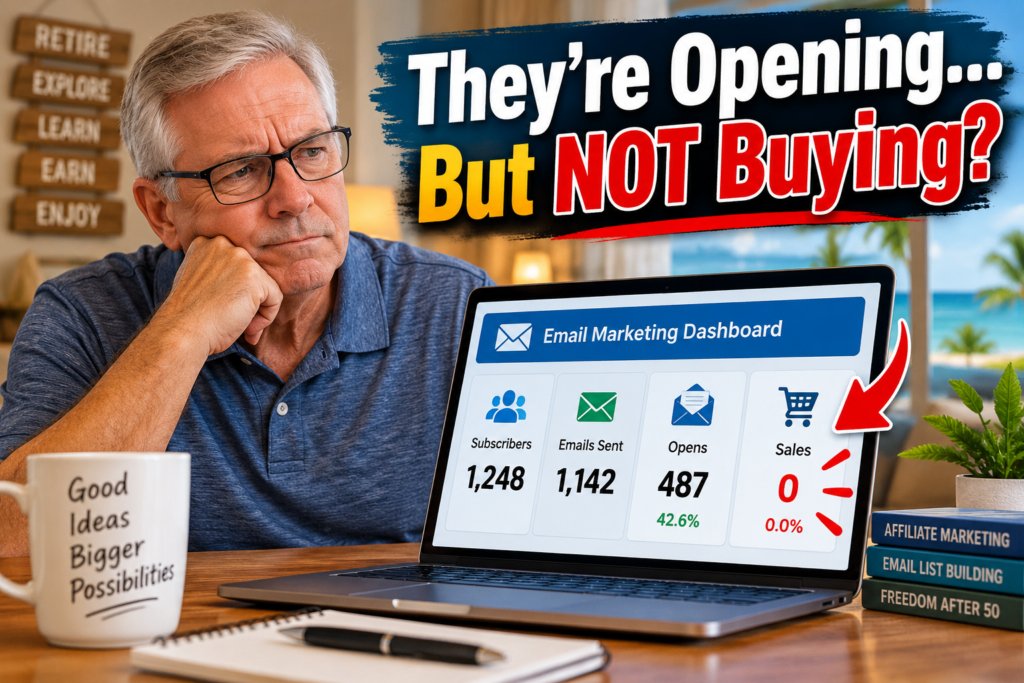
You check your email marketing dashboard, and you see that some of
your subscribers are even opening your emails.
That’s encouraging, right?
But then you check your affiliate dashboard.
No sales.
You wait another day. Send another email. Check again.
Still nothing.
Now you’re beginning to wonder, “What am I doing wrong?
If people are opening my emails, why aren’t they buying anything?”
If that sounds familiar, you’re certainly not alone.
One of the biggest challenges beginners face in affiliate marketing is understanding
how to turn email subscribers into customers.
And here’s something I’ve come to appreciate during my own online business journey:
Just because someone opens your email doesn’t mean they’re ready to open their wallet.
There’s an important difference between getting someone’s attention and earning their trust.
Let’s explore that difference.
An Email Open Is Just the Beginning
Think about the last time you walked into a store just to look around.
Maybe you were interested in a new television, a set of golf clubs, or something for your home.
You weren’t necessarily ready to buy anything. You simply wanted to see what was available.
Now imagine a salesperson approaching you the moment you walk through the door.
“Ready to buy? We’ve got a great deal today!”
You might politely say, “No thanks, I’m just looking.”
That’s exactly how many email subscribers feel.
They signed up because something caught their attention. Maybe you offered helpful information, a free guide, or a solution to a problem they’ve been struggling with.
But that doesn’t mean they’ve decided to purchase anything.
They’re still looking around.
An email open is a sign of possible interest—not a commitment to buy.
And there’s another important detail. Email tracking isn’t perfect. Some email services automatically load tracking pixels, which can make an email appear opened even when the subscriber hasn’t actually read it.
That’s why I believe it’s important to look beyond open rates and pay attention to genuine engagement, such as replies, meaningful clicks, and eventually purchases.
Are You Solving Their Problem—or Just Promoting a Product?
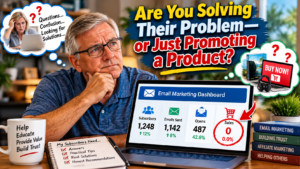
Here’s a question worth asking yourself.
When you send an email to your subscribers, are you thinking about what they need—or what you want them to buy?
It’s an easy trap to fall into.
After all, we’re building an affiliate marketing business because we’d eventually like to generate income.
There’s nothing wrong with that.
But think about it from your subscriber’s perspective.
Suppose someone joins your email list because they’re over 50, approaching retirement, and interested in learning how to earn additional income online.
They might be worried about technology. They might have tried another opportunity that didn’t work out. Or perhaps they’re simply overwhelmed by all the conflicting advice floating around the internet.
Now imagine that their first three emails from you are nothing but product promotions.
“Buy this program!”
“Don’t miss this opportunity!”
“Get started before it’s too late!”
Would you blame them for losing interest?
I wouldn’t.
They came looking for guidance, not another sales pitch.
People are more likely to consider buying when they believe you understand
their problem and can help them solve it.
That’s why I try to approach my online business as a learning journey I’m sharing with others.
I’m still learning myself, and I believe there’s real value in being open about that.
You don’t have to pretend to know everything to help someone who’s just getting started.
Sometimes, simply sharing what you’ve learned can make a meaningful difference.
Trust Comes Before the Transaction
When my wife and I operated our engineering service bureau for more than 30 years, one thing became very clear to me.
Business relationships matter.
Customers wanted to know they could depend on us. They needed confidence that we understood their requirements and would follow through on our commitments.
That kind of trust wasn’t created overnight.
And I believe the same principle applies to affiliate marketing.
Your subscribers don’t automatically know who you are.
They don’t know whether your recommendations are helpful, whether you’ve actually used a product, or whether you’re simply trying to earn a commission.
You have to give them reasons to trust you.
How?
Start by being helpful.
Share a practical tip that solves a small problem.
Explain something confusing in everyday language.
Tell a story about a mistake you made and what you learned from it.
And when you recommend a product or service, explain why you believe it might be useful, who it’s best suited for, and any limitations worth knowing.
You should also be transparent when you may earn an affiliate commission.
Trust grows when people consistently receive value without feeling pressured to purchase something every time they hear from you.
And that trust can become one of the most valuable assets in your online business.
Not Every Subscriber Is at the Same Starting Point
Here’s another thing that’s easy to overlook.
Two people can join your email list on the same day for completely different reasons.
One person might be retired and simply curious about affiliate marketing.
Another might already have a website and an email list but can’t figure out how to generate sales.
A third might be ready to invest in training because they’re tired of trying to figure everything out alone.
Same email list.
Three very different situations.
So, should all three receive exactly the same message?
Not necessarily.
The more you understand your subscribers, the better you can communicate with them.
One simple way to start is by asking questions.
For example, you could send an email that says:
“I’m curious—what’s the biggest challenge you’re facing with affiliate marketing right now? Is it getting started, finding traffic, building an email list, or making your first sale? Just hit reply and let me know.”
You might be surprised by what you learn.
Those replies can help you create more relevant content, recommend more appropriate resources, and build stronger relationships.
And you don’t need a complicated automation system to begin.
Sometimes, a simple conversation is the best place to start.
Give Your Subscribers a Reason to Look Forward to Your Next Email
Let’s return to our original question.
Why are people opening your emails but not buying?
Maybe they’re curious but not ready.
Maybe they haven’t developed enough trust.
Or maybe the offers you’re sharing don’t match what they’re currently looking for.
Whatever the reason, sending more promotional emails isn’t always the answer.
Instead, consider making your next message genuinely useful.
Share a helpful lesson.
Answer a question.
Explain a common beginner mistake.
Offer one simple action they can take today.
For example, if your subscribers are struggling to build an email list, explain how an opt-in page works before recommending a tool to create one.
Give them a small win.
When subscribers begin to associate your emails with useful information, they have a better reason to keep reading.
And over time, some may become more comfortable considering your recommendations.
That’s how a list of email addresses can begin developing into an audience that knows, likes, and trusts you.
The Journey From Subscriber to Customer Takes Time
If there’s one lesson I’d like you to take away from today’s article, it’s this:
Don’t confuse someone’s curiosity with their readiness to buy.
Learning how to turn email subscribers into customers isn’t about discovering a clever trick or writing the perfect sales pitch.
It’s about understanding people.
It’s about recognizing their concerns, helping them solve problems, and earning their confidence through consistent communication.
Especially for those of us building an online business later in life, I believe this approach makes a lot of sense.
We’ve spent years developing relationships, learning from experience, and understanding the importance of doing what we say we’re going to do.
Those qualities still matter online.
And you don’t need to master every marketing technique overnight.
Start with one simple question:
“What can I share with my subscribers today that will genuinely help them?”
That’s a pretty good place to begin.
Coming Up Next: There’s More to the Story!
Now, you might be thinking:
“Okay, Stephen, I understand that trust matters. But what else can I do to help turn my subscribers into actual buyers?”
I’m glad you asked!
Because building trust is only one piece of the puzzle.
Over the next few days, I’ll be sharing four more articles in this five-part series, exploring additional reasons subscribers don’t buy and practical ways to improve your results.
We’ll look at attracting the right people, understanding the difference between subscribers and buyers, creating more meaningful follow-ups, and avoiding common list-building mistakes.
Some of these ideas might surprise you.
And one small change in how you approach your email list could make a real difference in the relationships you’re building.
So be sure to come back for Part 2. We’re just getting started!
Want a Simpler Way to Learn Affiliate Marketing?
If you’re over 50, retired, or simply looking for a clearer path to building an online business, I invite you to explore the Clickbank Profit Club.
It’s a resource I’m personally involved with that offers training, tools, and guidance for people learning affiliate marketing.
You can join my team as a FREE member, look around, and decide whether it’s a good fit for you.
👉 Join My Free Clickbank Profit Club Team Here
No pressure. Just an opportunity to learn something new and take your next step.
Thanks for spending a little time with me today. I look forward to sharing more with you in the next article.
— Stephen Wallace
StephenWallaceOnline.com — Helping Beginners Over 50 Find Clarity in Online Marketing
Affiliate Disclosure: Some links on this website are affiliate links, which means I may earn a small commission if you purchase a product or service through one of my links, at no additional cost to you. These commissions help support this website and allow me to continue sharing helpful information, tools, and resources. Thank you for your support!