
Are You Building an Email List… or Just Collecting Freebie Seekers?
Part 2 of 5: How to Build a Buyer’s Email List That Attracts the Right People

What If You’re Attracting the Wrong Subscribers?
In our previous article, “They’re Opening Your Emails… So Why Aren’t They Buying?” we talked about why getting someone to open your email doesn’t necessarily mean they’re ready to make a purchase.
But here’s something else I’ve been thinking about during my own affiliate marketing journey.
What if the problem isn’t just what we’re sending our subscribers?
What if we’re attracting the wrong people to our email lists in the first place?
That’s what we’re going to explore today. Because when it comes to building an email list that eventually generates sales, who joins your list may be just as important as how many people sign up.
And if you’re over 50, retired, or just beginning your online business journey, this is something worth understanding before spending too much time or money trying to grow your list.
A Bigger Email List Isn’t Always a Better List
Imagine you’re hosting a small gathering at your home.
You invite 100 people who share your interests, enjoy meaningful conversations, and genuinely want to learn something new.
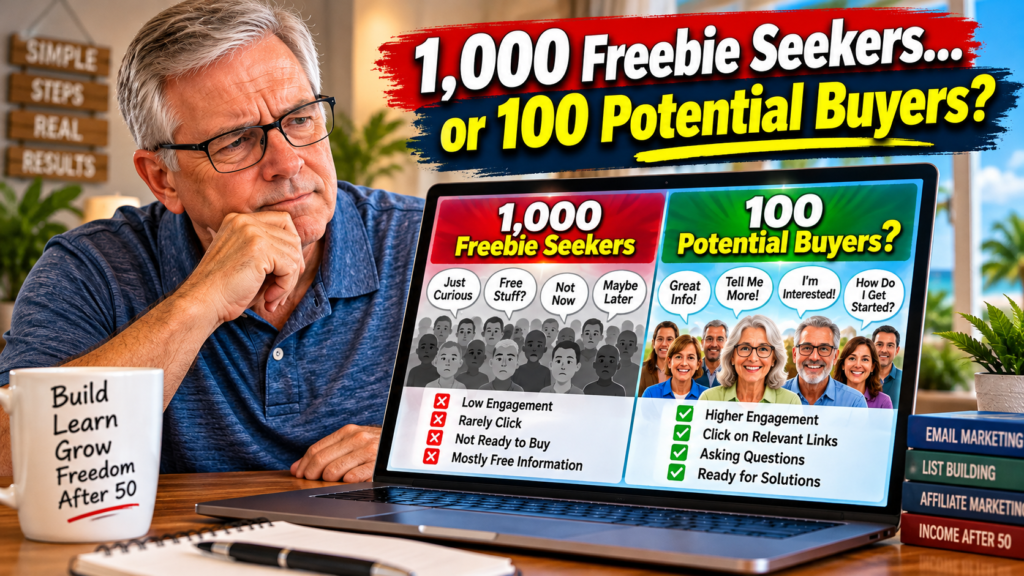
Now imagine inviting 1,000 strangers who showed up simply because you advertised free food.
Which group do you think would be more interested in what you had to say?
Probably the smaller group.
Email marketing works much the same way.
It’s exciting watching your subscriber numbers grow. Believe me, I understand that feeling. When you’re starting an online business, every new subscriber can feel like a small victory.
But here’s what I’ve learned:
A thousand subscribers who aren’t interested in your message may be less valuable than a hundred who genuinely want the solutions you’re sharing.
That doesn’t mean smaller lists automatically make more money. It simply means subscriber quality matters.
If you’re promoting affiliate marketing training to people who only signed up for a free giveaway unrelated to online business, you may have a difficult time generating interest.
But if your subscribers joined because they want to learn affiliate marketing, your recommendations have a much better chance of being relevant.
That’s why I believe we should focus on attracting the right people before worrying about attracting more people.
What Exactly Is a Buyer’s Email List?

You’ve probably heard the expression “buyers list” floating around affiliate marketing circles.
It sounds pretty appealing, doesn’t it?
A list filled with people who are ready to purchase whatever you recommend!
Well, I wish it were quite that simple.
Technically, a buyer’s list contains people who have already purchased a product or service. Their purchase history demonstrates that they’ve been willing to spend money.
But when beginners talk about how to build a buyer’s email list, they’re often really asking something slightly different:
“How can I attract subscribers who are genuinely interested in buying products that solve their problems?”
That’s an important distinction.
Think of your email audience as having three general groups.
The Curious Subscriber: Someone who wants free information and is still exploring possibilities.
The Interested Prospect: Someone actively looking for a solution and considering different options.
The Existing Buyer: Someone who has already made a purchase and may be interested in other relevant products.
All three can be valuable.
Someone who starts as a curious subscriber today might become a customer months from now.
The key is understanding where people are in their journey instead of treating everyone as though they’re ready to buy immediately.
Are You Attracting the Right People?
Here’s where things get interesting.
Let’s say you’re trying to attract beginners over 50 who want to learn how to build an affiliate marketing business.
You create a free guide titled
“10 Ways to Get Free Stuff Online.”
You might attract plenty of subscribers.
But how many of those people are actually interested in learning affiliate marketing?
Maybe some. Probably not all.
Now imagine offering a different guide:
“5 Simple Steps to Starting Affiliate Marketing After 50.”
See the difference?
The second guide speaks directly to the audience you want to help.
It’s not trying to appeal to everyone.
It’s attracting people who have a specific interest that matches the information and resources you plan to share.
The more closely your free offer matches your audience’s needs, the more relevant your future emails are likely to be.
This is particularly important when you’re spending money on traffic.
You don’t want to pay for hundreds of subscribers who have no interest in your subject.
You want people who are genuinely curious about building an online business and willing to learn.
That doesn’t guarantee they’ll become customers, but it gives you a much better starting point.
How Can You Recognize Someone Who Might Become a Buyer?
Now, here’s a question I find especially interesting.
How can you tell whether someone is simply collecting free information or seriously considering a purchase?
Unfortunately, there’s no magic button that identifies future buyers.
But there are clues.
Someone who replies to your email with a specific question may be showing genuine interest.
Someone who clicks a link to learn more about a training program may be exploring a possible solution.
Someone who asks about pricing, features, or how to get started may be moving closer to making a decision.
Of course, none of these actions guarantees a sale.
But they can help you understand what matters to your subscribers.
For example, imagine receiving this reply:
“Stephen, I’m retired and interested in affiliate marketing, but I’m not very comfortable with technology. Is there a simple way to get started?”
That’s valuable information!
Now you know that person isn’t necessarily looking for the newest advanced marketing software.
They’re looking for simplicity, guidance, and reassurance that they can learn at their own pace.
Wouldn’t it make more sense to respond with helpful beginner information rather than immediately sending another product promotion?
I certainly think so.
And sometimes, taking a few minutes to answer someone’s question can do more to build trust than sending several automated sales emails.
Five Simple Ways to Start Building a Better Email List
If you’re wondering how to build a buyer’s email list without becoming overwhelmed, here are five practical steps worth considering.
1. Get specific about who you want to help.
Don’t try to attract everyone interested in making money online. Focus on a particular group, such as retirees or beginners over 50 who want a simpler approach to affiliate marketing.
2. Offer something that solves a relevant problem.
Create a free checklist, short guide, or beginner lesson that directly relates to the subject you’ll be teaching.
3. Be clear about what subscribers can expect.
Let people know they’ll receive beginner-friendly tips, lessons, resources, and occasional product recommendations. Give them a genuine choice to subscribe.
4. Pay attention to what interests them.
Notice which topics generate replies and meaningful clicks. Ask questions and use the answers to improve your content.
5. Build relationships before asking for purchases.
Help subscribers make progress. Share what you’re learning. Recommend products when they genuinely fit someone’s needs.
None of these steps requires complicated technology.
And you don’t have to accomplish everything in one afternoon.
Start small, make improvements, and keep learning.
Building a Business Instead of Chasing Numbers
After spending more than 30 years operating an engineering service bureau with my wife, I’ve come to appreciate something about running a business.
Success isn’t simply about finding more customers.
It’s about understanding what people need and providing dependable solutions.
I believe that same principle applies to affiliate marketing.
It’s easy to get distracted by subscriber counts, traffic statistics, and promises of instant results.
But those numbers don’t tell the whole story.
What matters is whether you’re building an audience that finds your information useful and trusts your recommendations.
That’s one reason I became involved with the Clickbank Profit Club.
I appreciate having access to structured training, tools, and a community while continuing to develop my own affiliate marketing business.
For someone who’s just starting out, having a place to learn the fundamentals can make the process feel less overwhelming.
And that’s really what I want this website to be about—sharing what I’m learning and helping others find a clearer path.
The Real Goal: Attract People You Can Actually Help
Before we wrap up, I want to leave you with one important thought.
The goal isn’t simply to collect more email addresses. It’s to attract people whose needs match the solutions you’re prepared to offer.
You don’t need thousands of subscribers to begin building meaningful relationships.
You need a clear message, a relevant audience, and a willingness to help.
Some subscribers may eventually purchase something. Others may simply appreciate your information.
Both deserve to be treated with respect.
And as your experience grows, you’ll become better at recognizing what your audience needs and how you can serve them.
That’s a much stronger foundation for an online business than chasing subscriber numbers alone.
Coming Up in Part 3: Where Do You Find Potential Buyers?
Now that we’ve talked about attracting the right people, another question naturally comes to mind.
“Okay, Stephen, I understand why subscriber quality matters. But where do I actually find people who are interested in buying affiliate products?”
That’s exactly what we’ll explore next!
In Part 3 of this five-part series, we’ll look at practical ways to find potential buyers, understand where they’re searching for solutions, and attract them to your email list.
We’ll also discuss why some traffic sources may bring you plenty of visitors but very few interested prospects.
If you’ve ever wondered whether you’re attracting the wrong kind of traffic, you won’t want to miss the next article.
Be sure to come back over the next few days. We’re building on these lessons one step at a time!
Want a Simpler Starting Point for Affiliate Marketing?
If you’re over 50, retired, or simply looking for a beginner-friendly way to explore affiliate marketing, I’d like to invite you to take a look at the Clickbank Profit Club.
It’s a learning resource I’m personally involved with that provides training, tools, and guidance for people interested in building an online business.
You can join my team as a FREE member, explore what’s available, and decide whether it’s right for you.
👉 Join My Free Clickbank Profit Club Team Here
There’s no pressure or obligation to purchase anything. Just an opportunity to learn and see where your own online journey might lead.
Thanks for spending a little time with me today.
Until next time, keep learning, keep moving forward, and remember—building something worthwhile takes time.
— Stephen Wallace
StephenWallaceOnline.com — Helping Beginners Over 50 Find Clarity in Online Marketing
Affiliate Disclosure: Some links on this website are affiliate links, which means I may earn a small commission if you purchase a product or service through one of my links, at no additional cost to you. These commissions help support this website and allow me to continue sharing helpful information, tools, and resources. Thank you for your support!