
Where Do You Find Potential Buyers? (And How Do You Attract Them to Your Email List?)
Part 3 of 5: Finding the Right People for Your Affiliate Marketing Business
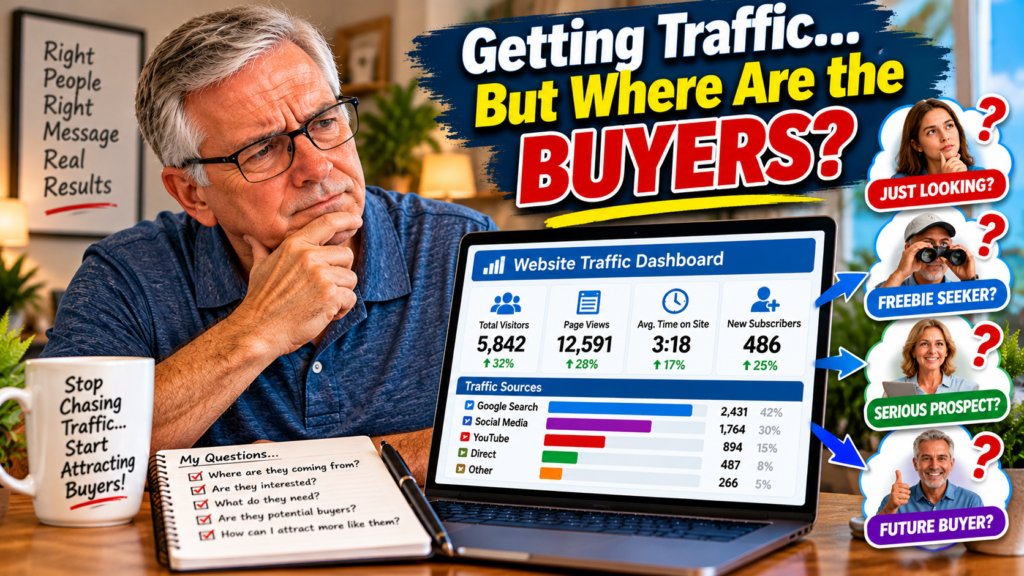
You’ve Started Building Your List… But Where Are the Buyers?

In our previous article, “Are You Building an Email List… or Just Collecting Freebie Seekers?” we discussed why having a thousand subscribers doesn’t necessarily mean you have a thousand potential customers.
We also talked about something I believe is especially important:
The goal isn’t simply to collect more email addresses. It’s to attract people whose needs match the solutions you’re prepared to offer.
But that brings us to another question.
Okay, Stephen, that makes sense. But where do you find potential buyers in the first place?
That’s a question I believe almost every beginner in affiliate marketing eventually asks.
After all, you can have a great product to recommend, a beautifully designed website, and an email follow-up system ready to go.
But if the right people never find you, none of those things will accomplish very much.
And here’s something I’ve learned during my own online business journey:
Finding potential buyers isn’t necessarily about getting more traffic. It’s about attracting the right traffic.
Let’s explore five practical ways to begin doing exactly that.
1. Start With the Problem, Not the Product
One of the biggest mistakes beginners make is starting with a product they want to promote and then trying to convince everyone they meet to buy it.
I understand why that happens.
You discover an affiliate program offering attractive commissions, and naturally, you start thinking about how to generate sales.
But there’s a better question to ask first:
Who has a problem this product might actually solve?
Let’s say you’re promoting beginner-friendly affiliate marketing training.
Who might benefit from that?
Perhaps someone approaching retirement who wants to explore additional income opportunities.
Maybe someone over 50 who’s interested in starting an online business but feels overwhelmed by technology.
Or perhaps someone who’s already tried affiliate marketing but can’t figure out how to build an email list.
These people have different experiences, but they share something important.
They’re looking for answers.
And that’s where your opportunity begins.
Instead of asking, “Where can I promote my affiliate link?” Try asking:
“Where are people already looking for solutions to the problems I can help them solve?”
That simple change in thinking can make your marketing much more focused.
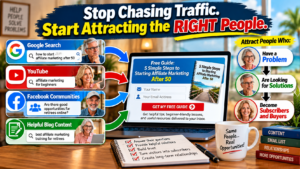
2. Look Where People Are Already Asking Questions
Think about how you search for information when you need help with something.
Maybe you visit Google, watch a YouTube video, or browse a Facebook group where people share similar interests.
Your potential subscribers do the same thing.
For example, someone might search Google for:
- How do I start affiliate marketing after 50?
- Can retirees learn affiliate marketing?
- How do I build an email list from scratch?
- Why am I getting website visitors but no sales?
Each question represents a possible opportunity to provide helpful information.
That’s one reason I enjoy creating content for StephenWallaceOnline.com.
A blog article that answers a specific question can continue helping readers long after it’s published.
YouTube is another place people search for guidance.
And Facebook communities can be useful for discovering the questions beginners are asking.
But here’s an important point.
Don’t enter communities simply to drop affiliate links.
Instead, participate in conversations. Answer questions when you can. Share useful information and follow the community’s rules.
If someone becomes interested in learning more, they can choose to visit your website or subscribe to your email list.
The goal is to become a helpful resource, not another person constantly promoting something.
3. Understand the Difference Between Traffic and Buying Interest
Here’s something worth thinking about.
Imagine two people visiting your website.
The first person clicks because they saw an advertisement promising a free gift.
The second person arrives after searching for “best affiliate marketing training for beginners over 50.”
Which visitor might be more interested in exploring a training program?
I’d pay closer attention to the second visitor.
Why?
Because their search suggests they’re already looking for a particular type of solution.
This is sometimes called search intent.
Someone searching “What is affiliate marketing?” may simply be curious.
Someone searching “How do I choose an affiliate marketing training program?” may be comparing options.
And someone searching for the price or features of a specific program may be closer to making a decision.
Of course, none of these searches guarantees a purchase.
But understanding what people are looking for helps you create more relevant content.
This is especially important if you’re paying for traffic.
A thousand random visitors might generate fewer interested subscribers than a hundred visitors who are actively researching the subject you’re teaching.
Traffic creates opportunities. Relevant traffic creates better opportunities for meaningful connections.
And those connections are where trust begins.
4. Give Potential Buyers a Reason to Join Your Email List
Now suppose someone finds your blog article through Google.
They read your information and think, “This is helpful!”
That’s a great start.
But what happens next?
If they leave your website without subscribing, you may never have another opportunity to communicate with them.
That’s why having a simple, relevant opt-in offer matters.
Let’s say someone reads an article about starting affiliate marketing after retirement.
You might offer a free checklist titled
“5 Simple Steps to Starting Affiliate Marketing After 50.”
That offer connects directly to what they’re already interested in learning.
And when they subscribe, they’re giving you permission to continue the conversation.
Notice that we’re not immediately asking them to purchase something.
We’re offering another helpful step.
This is the approach I prefer:
Helpful content → Relevant free resource → Email relationship → Appropriate recommendation.
It’s simple enough to understand, even if you’re completely new to online marketing.
And remember, you don’t need an elaborate funnel with dozens of pages.
A helpful blog post, a straightforward opt-in page, and a few useful follow-up emails can provide a practical starting point.
You can improve the system as you gain experience.
5. Start Small and Pay Attention to What Works
When I first began exploring online business opportunities, I discovered there were plenty of different strategies competing for my attention.
And with today’s AI tools, marketing software, and automation platforms, it’s easier than ever to feel like you need to learn everything at once.
But I don’t believe that’s necessary.
Especially for those of us starting something new later in life, there’s real value in keeping things manageable.
Instead of trying five traffic strategies at the same time, choose one.
Maybe you’ll begin by publishing helpful blog articles.
Perhaps you’ll share practical tips on your Facebook page.
Or maybe you’ll create short YouTube videos answering common beginner questions.
Whichever approach you choose, give yourself time to learn.
Pay attention to what happens.
Which articles attract visitors?
Which topics encourage people to subscribe?
Which emails receive genuine replies or meaningful clicks?
And which recommendations seem most relevant to your audience?
Those observations can help you make better decisions.
You don’t need complicated analytics to begin noticing patterns.
You simply need a willingness to learn from what your audience is telling you.
Start with one traffic source, one audience, and one clear path for helping people take the next step.
That’s a much more manageable approach than chasing every new marketing strategy.
Where Does Clickbank Profit Club Fit Into This?
One reason I became involved with the Clickbank Profit Club is that I appreciate having a more structured place to continue learning about affiliate marketing.
When you’re starting out, it’s easy to spend hours watching unrelated videos, reading conflicting advice, and trying to figure out which tools you actually need.
Having access to training, resources, and a community can help make that learning process feel more organized.
But here’s something I want to emphasize.
No program can replace the importance of understanding your audience.
Whether you’re using Clickbank Profit Club or another resource, you still need to learn who you’re trying to help, what problems they’re facing, and how to communicate with them.
That’s what turns marketing tools into a meaningful business-building process.
And it’s something I’m continuing to work on in my own journey.
Finding Buyers Begins With Being Helpful
So, where do you find potential buyers?
You find them wherever people are actively searching for solutions to problems you understand.
They may be reading blog posts, watching videos, participating in online communities, or comparing products and training programs.
But here’s the lesson I’d like you to remember:
You don’t have to chase everyone. You need to become easier to find by the people you can genuinely help.
That takes time, patience, and consistent effort.
And that’s okay.
If you’re over 50 or retired and just beginning your affiliate marketing journey, don’t feel pressured to master every traffic strategy immediately.
Choose one approach.
Learn how it works.
Create something useful.
And keep improving as you go.
Coming Up in Part 4: Your Subscribers Trust You… So What’s Stopping the Sale?
We’ve now covered three important pieces of building a better email list.
In Part 1, we explored why email opens don’t automatically translate into purchases.
In Part 2, we discussed attracting the right subscribers instead of simply collecting email addresses.
And today, we’ve looked at where to find potential buyers and how to encourage them to join your list.
But here’s an interesting question.
What happens when you’ve attracted the right people, provided helpful information, and started building trust… but they’re still not buying?
That’s exactly what we’ll explore in Part 4.
We’ll discuss what may be missing between a subscriber’s interest and their decision to purchase—and how you can help them make an informed decision without becoming pushy.
Be sure to come back for the next article. There’s more to learn, and we’re making progress one step at a time!
Ready to Explore Affiliate Marketing?
If you’re over 50, retired, or simply interested in learning how to build an affiliate marketing business, you’re welcome to explore the Clickbank Profit Club with me.
It’s one of the resources I’m using as I continue learning about affiliate marketing, email list building, and online business systems.
You can join my team as a FREE member, look around, and decide whether it might be helpful for your own journey.
👉 Join My Free Clickbank Profit Club Team Here
No pressure. Just another opportunity to learn and take your next step.
Thanks for spending a little time with me today.
Until next time, keep learning, keep moving forward, and remember that building a business starts with helping people.
— Stephen Wallace
StephenWallaceOnline.com — Helping Beginners Over 50 Find Clarity in Online Marketing
Affiliate Disclosure: Some links in this article are affiliate links, which means I may earn a small commission if you purchase a product or service through one of my links, at no additional cost to you. Thank you for supporting my website and allowing me to continue sharing helpful resources.