
Should You Buy a Buyers List—or Build Your Own?
Part 5 of 5: Buy a Buyer’s List or Build Your Own? The Truth About Building an Email List That Lasts
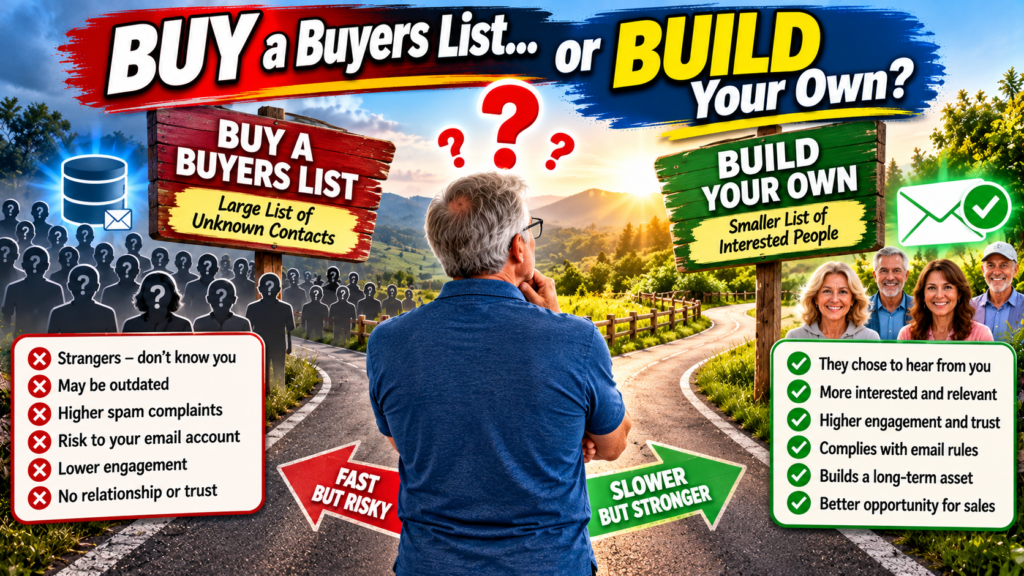
Wouldn’t It Be Easier to Just Buy a List?
In our previous article, “Your Subscribers Trust You… So What’s Stopping the Sale?”, we explored why people who open your emails, click your links, and appreciate your advice still might not make a purchase.
Throughout this five-part series, we’ve covered some important lessons.
We’ve discussed why email opens don’t guarantee sales, why attracting the right subscribers matters, where to find potential buyers, and how to help interested subscribers make informed buying decisions.
But there’s one more question worth exploring.
Wouldn’t it be easier to simply purchase an email list filled with people who have already bought something?
Sounds tempting, doesn’t it?
Imagine skipping all the work of attracting subscribers and immediately having access to hundreds—or even thousands—of email addresses.
Some companies even advertise these as “verified buyers lists.”
But here’s the question I think we should ask before spending our money:
Are we really buying potential customers, or are we buying a list of strangers who have no idea who we are?
If you’re over 50, retired, or just beginning your affiliate marketing journey, understanding this difference could save you considerable frustration.
Let’s explore five things I believe every beginner should understand.
1. What Are You Actually Buying?
First, let’s clear up something that often confuses beginners.
A buyer’s list generally refers to people who have previously purchased products or services.
But that doesn’t mean they’re interested in purchasing something from you.
Think about it.
Suppose you bought a new set of golf clubs last month.
Does that automatically mean you’d welcome promotional emails from every golf equipment company in the country?
Probably not.
You purchased something because it met a particular need at a particular time.
That purchase doesn’t mean you’ve given every other business permission to contact you.
Affiliate marketing works the same way.
Someone who purchased a digital product from another marketer isn’t automatically interested in your training program, software recommendation, or business opportunity.
And there’s another concern.
How do you know the seller’s claims are accurate?
A company might advertise thousands of verified buyers, but you may have no reliable way to confirm when those people purchased, what they purchased, or whether their contact information is current.
A history of buying something doesn’t automatically make someone your potential customer.
That’s an important distinction.
2. The Hidden Risks of Purchasing Email Lists
When you’re new to affiliate marketing, purchasing a list can sound like a shortcut to faster results.
But there are risks that aren’t always mentioned in the sales presentation.
One major concern is email deliverability.
If you send messages to people who don’t recognize your name, they’re more likely to ignore your emails, unsubscribe, or mark them as spam.
That can damage your sender reputation and make it harder for even your legitimate subscribers to receive your messages.
Another concern is outdated information.
Purchased lists may contain abandoned addresses, invalid email accounts, or contacts who are no longer interested in the subject.
And then there’s the issue of email marketing platform policies.
Many reputable email service providers restrict or prohibit importing purchased lists because of spam complaints and permission concerns.
For example, if you’re using an autoresponder service, you should review its rules before importing contacts from another source.
You also need to understand the laws that apply to your marketing.
In the United States, the CAN-SPAM Act establishes requirements for commercial email, including accurate sender information, nondeceptive subject lines, and a working unsubscribe method.
Other jurisdictions, including the European Union, may impose additional requirements concerning personal data and marketing permission.
Buying an email list doesn’t automatically give you permission to email everyone on it.
And even where a particular message may be legally permitted, your email service provider may still prohibit the practice.
For beginners, these complications can turn an apparent shortcut into an expensive headache.
3. Why Permission-Based Subscribers Are More Valuable
Now let’s look at the alternative.
Instead of purchasing a list, imagine someone discovers one of your blog articles.
Perhaps they’re searching for information about starting affiliate marketing after retirement.
They read your article and find your explanation helpful.
Then they see an invitation to receive a free beginner’s checklist and occasional email lessons.
They enter their email address because they genuinely want to hear more.
That’s a completely different relationship.
This person knows why they’re receiving your emails.
They’ve shown interest in your subject.
And they’ve chosen to continue the conversation.
That doesn’t mean they’ll automatically become a customer.
But you’ve established something important from the beginning.
Permission and relevance.
A permission-based email list gives you an opportunity to develop relationships with people who actually want the information you’re sharing.
You can answer questions, provide practical tips, and recommend products when those products genuinely fit their needs.
And if someone decides your emails aren’t right for them, they should always have a simple way to unsubscribe.
That’s how I believe email marketing should work.
Not by surprising strangers with unsolicited promotions, but by inviting interested people into an ongoing conversation.
4. Your Email List Is an Asset You’re Building
After spending more than 30 years running an engineering service bureau with my wife, I learned something about building a business.
The most valuable things often take time to develop.
Relationships.
Reputation.
Customer confidence.
Dependable systems.
You don’t build those things overnight.
And I believe your email list deserves the same long-term thinking.
When you attract subscribers through your own content, opt-in pages, and helpful resources, you’re developing an audience connected to your message.
Unlike a social media following, your permission-based email list can generally be managed and exported through your email marketing provider, subject to applicable rules and laws.
That gives you more control over how you communicate with your audience.
Of course, it doesn’t mean you own the people on your list.
Subscribers can leave whenever they choose.
But you are building a business asset: a permission-based audience, a body of helpful content, and a system for maintaining relationships.
That’s why I keep returning to a simple principle:
Think List First. Build the Path. Then get the traffic.
Instead of chasing commissions from one offer after another, you’re creating a foundation that can support your business over time.
And for those of us building an online business later in life, that seems like a much more sensible approach.
5. How to Build Your Own List Without Getting Overwhelmed
By now, you might be thinking:
“Okay, Stephen, I understand why building my own list makes sense. But where do I begin?”
Here’s the good news.
You don’t need a complicated system or a large advertising budget to get started.
I recommend focusing on five simple steps.
First, choose one audience.
For example, beginners over 50 who want to explore affiliate marketing without becoming overwhelmed by technology.
Second, identify one problem you can help solve.
Maybe your audience doesn’t understand how to build an email list or where to find website traffic.
Third, create a helpful reason to subscribe.
Offer a short checklist, beginner’s guide, or email lesson that addresses that problem.
Fourth, connect your opt-in page to an email autoresponder.
Make sure subscribers know what they’re signing up for, and use your follow-up emails to provide the information you promised.
Fifth, continue helping before recommending products.
Share practical lessons, answer questions, and introduce relevant resources when appropriate.
That’s your starting point.
You can improve your pages, emails, and traffic strategies as you learn.
And remember, you don’t have to do everything perfectly.
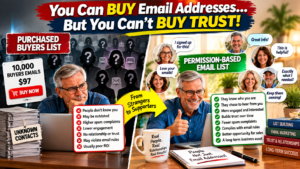
A small list of people who want to hear from you is a better foundation than a large list of strangers who never asked to be contacted.
Where Clickbank Profit Club Fits Into My Journey
One reason I’ve become involved with the ClickBank Profit Club is that I appreciate having access to training, tools, and resources while learning how to develop a more organized affiliate marketing business.
There are so many moving parts when you’re starting out.
Choosing an offer.
Building an opt-in page.
Setting up follow-up emails.
Finding relevant traffic.
And understanding how everything fits together.
For a beginner, that can feel overwhelming.
Having structured learning resources can make the process easier to understand.
But I want to be clear about something.
No program, including Clickbank Profit Club, can guarantee that you’ll make sales or earn a particular income.
You still need to put what you’re learning into practice, understand your audience, and develop your skills.
That’s the approach I’m taking myself.
And it’s the same approach I encourage others to consider.
Final Thoughts: Build Relationships, Not Just a Database
As we reach the end of this five-part series, I hope one message stands out above everything else.
Your email list isn’t simply a collection of addresses. It’s an opportunity to build relationships with people who trust you to provide useful information.
We’ve talked about getting subscribers to open your emails.
Attracting the right audience.
Finding potential buyers.
Helping interested subscribers make buying decisions.
And now, choosing between purchasing a list and building your own.
All five lessons connect to one simple idea.
Build something valuable before worrying about how quickly it might produce commissions.
Will everyone on your list purchase something?
Of course not.
Will it take time to develop an audience?
Absolutely.
But when you’re building a business you hope will last, I believe patience, consistency, and trust are worth the effort.
So here’s my challenge to you.
Instead of looking for a shortcut to your next hundred subscribers, think about how you can attract ten people who genuinely want the information you’re sharing.
Start there.
Help them.
Learn from them.
And continue building.
That’s how a small beginning can become a meaningful long-term project.
Thank You for Following This Five-Part Series!
If you’ve followed along from the beginning, I appreciate you spending this time with me.
My hope is that these articles have helped make email marketing feel a little less confusing and a lot more manageable.
You don’t have to be a technology expert.
You don’t need thousands of subscribers to begin.
And you certainly don’t need to chase every new marketing opportunity that comes along.
You need a clear audience, a helpful message, and a willingness to keep learning.
Ready to Take Your Next Step?
If you’re over 50, retired, or simply looking for a beginner-friendly introduction to affiliate marketing, I’d like to invite you to explore the Clickbank Profit Club.
It’s one of the resources I’m using as I continue developing my own online business.
You can join my team as a FREE member, look through the available resources, and decide whether the training is right for you.
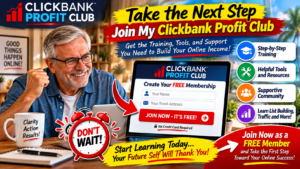
Learn More and Join My Free Clickbank Profit Club Team
There’s no pressure to purchase anything. Just an opportunity to learn, explore, and decide what makes sense for your own journey.
Thanks again for following this series.
Until next time, keep learning, keep moving forward, and remember:
Don’t just build an email list. Build something worth subscribing to.
— Stephen Wallace
StephenWallaceOnline.com — Helping Beginners Over 50 Find Clarity in Online Marketing
Affiliate Disclosure: Some links in this article are affiliate links, which means I may earn a small commission if you purchase a product or service through one of my links, at no additional cost to you. Thank you for supporting my website and allowing me to continue sharing helpful information and resources.